Clearance rubbish in London for homes, flats and workplaces
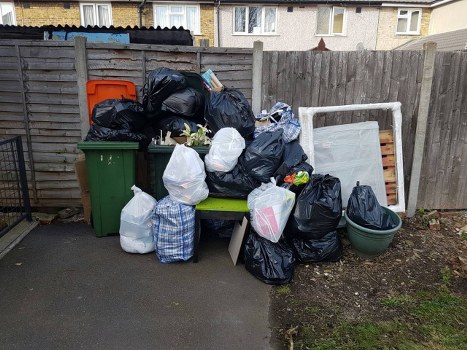
Clearance Rubbish provides rubbish clearance in London for domestic and commercial spaces that need items removed carefully, promptly and with minimal disruption. The service suits people dealing with accumulated household waste, bulky furniture, office contents, or mixed loads that are awkward to sort alone. We focus on practical removal, sensible segregation where possible and a straightforward way to arrange the work without overcomplicating the process.
Our work covers the kind of clearance jobs that often build up around everyday life: old furniture, broken items, bagged rubbish, fixtures from rooms being refreshed, and mixed waste from move-out or refurbishment projects. Where a load contains recyclable material, we separate it into suitable streams when that can be done safely and sensibly. If you need to clear a room, a floor or an entire property, the aim is to leave the area ready for its next use.
For a quick overview of scope, many customers start with rubbish clearance, then look at related services such as house clearance or office clearance when the job involves a fuller reset. If your waste includes larger household pieces, options like furniture clearance or large item collection can be relevant. The right path depends on the type of material, access and how much needs taking away.
What the clearance service covers
Clearance work is not limited to a single kind of waste. A typical job can involve bagged rubbish, loose clutter, dismantled items, worn-out soft furnishings, old storage pieces and general non-hazardous material that has become too much to keep on site. The practical value lies in having one organised visit that removes the load without requiring the customer to arrange several separate collections. That is especially useful when items are mixed and not all of them fit a normal skip or council collection.
Different properties present different access needs, so the work has to remain adaptable. In a flat, that may mean careful use of communal areas and lifts where available. In a house, it may mean handling lofts, garages, bedrooms or outbuildings with uneven storage. Commercial clearances can involve desks, chairs, shelving, archive bags or broken office equipment. Browse home clearance for fuller domestic jobs, or property clearance where the task spans more than one type of room or occupancy.
Useful materials are often recovered for recycling when separation is practical, while unsuitable or contaminated items are directed to the appropriate waste route. That distinction matters because not all items should be treated the same way. For mixed domestic waste, the goal is to keep the load moving efficiently while still paying attention to what can and cannot be reused, dismantled or processed responsibly. See recycling and rubbish for the broader approach to mixed loads and what typically happens after collection.
Household clearance for rooms, furniture and bulky items

Domestic clearance often starts with a specific room and grows from there. A loft may contain years of stored boxes, broken furniture and forgotten household items; a spare room may have become a storage area; a garage may hold items that are too bulky to move without help. The service is built to remove these loads in a controlled way, making it easier to reclaim usable space without sorting every item into separate transport arrangements first. It is a practical option when the rubbish is both awkward and varied.
For furniture-related jobs, there is value in choosing the correct service label rather than forcing everything into a generic collection. Sofas, wardrobes, tables and similar pieces are often better dealt with through a service focused on larger household objects. You can explore sofa removal for soft furnishings, furniture removal and collection for broader items, and furniture disposal when the emphasis is on getting unwanted pieces taken away cleanly. The most suitable option depends on whether the job is a single item, several pieces or a fuller room clear-out.
Because not every home clearance is the same, it helps to think in terms of what actually needs moving: bulky furniture, general rubbish, old bedding, broken storage, or a mix of all of these. In some cases, customers also need support with related items such as mattresses or white goods, which can be handled through specific pathways rather than bundled into an unrelated clearance type. That keeps the service clear and avoids confusion about what will be removed on the day.
Office and business clearance with minimal disruption
Business clearances are usually about more than emptying a room. Offices may contain desks, chairs, filing units, computer peripherals, packaging and obsolete stock that all need to be moved out while the premises remain usable for staff or contractors. A careful clearance service helps reduce disruption by separating items sensibly, removing waste in workable loads and keeping the job focused on the specific spaces that need clearing. This is especially relevant during a move, refurbishment or lease handback.
When commercial premises need a fuller reset, it can be helpful to review commercial waste collection alongside commercial waste disposal, especially if the load includes recurring waste as well as one-off clearance items. For dedicated workplace clear-outs, office clearances and office clearance offer closely related ways to frame the work, while business waste removal suits mixed operational waste that is not just furniture or storage equipment.
Planning a business job is simpler when the customer knows which rooms, floors or storage areas need attention and whether anything should be kept aside for reuse, donation or internal relocation. Access details, loading restrictions and timing matter more on commercial sites than many people expect, because they affect how the work is organised and how many trips are needed. If you are comparing options, the safest approach is to match the service to the type of waste rather than only the size of the premises.
Domestic specialist services for awkward clearances
Some clearance jobs are best treated as specialist domestic tasks rather than ordinary rubbish removal. Probate-related clearances, for example, may involve the contents of an entire property and a need to separate kept items from items to be removed. Hoarded spaces can involve dense accumulation, careful sorting and a slower pace because access may be limited. These jobs need a considerate, methodical approach rather than a rushed emptying of the room.
Relevant service pages can help define the task more accurately. See probate clearance for estates and inherited properties, probate house clearance for a full home setting, and hoarder clearance where the priority is to remove accumulated belongings and rubbish in a structured way. When the property is especially cluttered, the decision is not only what to take away but how to approach the work safely and respectfully.
Household specialist jobs often involve a blend of ordinary waste and items that have emotional or practical value. A measured service leaves room for that distinction. Some loads may be partially salvageable, some may require careful handling because of their condition, and some may need to be removed in a sequence rather than all at once. That is why specialist domestic clearance sits apart from simple bin-emptying and benefits from a more precise brief.
Bulky waste, beds, mattresses and white goods
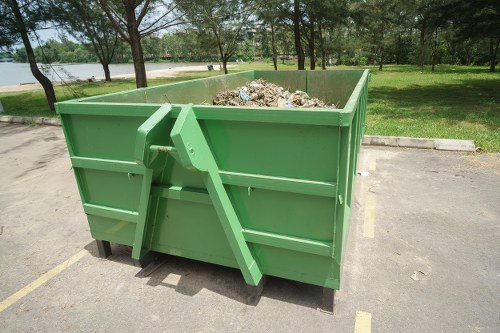
Bulky items are often the most inconvenient part of a clearance because they are hard to move, awkward to carry and difficult to break down without the right equipment. A standard domestic or business waste service can include large objects, but some categories are better handled through dedicated item routes. This includes beds, mattresses, fridges and other white goods that require a more specific disposal process and, in many cases, a careful approach to separation before the load is processed.
Where the waste is dominated by one type of larger item, related pages such as bed disposal, mattress disposal, fridge disposal and white goods recycle can help customers understand the likely service fit. For broader household larger items, bulky waste collection and large item collection are useful categories when several awkward objects need taking away together.
It is also worth considering whether the load has been partly dismantled already. A wardrobe taken apart into panels behaves very differently from an assembled one, and a bed frame without a mattress changes the handling requirements. That detail affects how the collection is planned and whether the job sits within a furniture, bulky waste or appliance-focused route. Clear classification keeps the work efficient and helps avoid surprise on the day.
Garden, garage and outdoor waste removal
Outdoor clearances often build up more slowly than indoor ones, but the final load can be just as substantial. Garden waste may include cuttings, soil-contaminated debris, old planters, broken outdoor furniture, fencing offcuts or mixed waste left after tidying a plot. Garage clearance can involve tools, boxes, household overflow and items that have been stored for so long they no longer have an obvious place inside the property. Both need a service that can manage mixed material sensibly.
For this kind of work, the most relevant pages are garden waste clearance, garden clearance and garage clearance. A garden job is not only about organic waste; it may also contain plastics, timber, damaged furniture or general clutter from sheds and borders. A garage job may be almost entirely mixed household overflow, so the task is often more about volume and access than about one particular item type.
The practical choice is whether the work is best approached as a one-off clearance or as part of a larger property tidy-up. Some customers only need a pile of outdoor material removed, while others want a complete outbuilding emptied before repair or repainting begins. When the rubbish has been outdoors for a while, it can be heavier, dirtier or more compacted, so it helps to expect a slightly different handling method from an internal room clearance.
How a quote is usually shaped
Pricing for clearance work is usually influenced by the amount of material, the type of items, the ease of access and any specialist handling the load requires. Mixed rubbish is different from a single bulky item, just as a ground-floor collection is different from a job that involves stairs, narrow entrances or several separate rooms. The most useful quotation is therefore one that reflects the actual task rather than a vague idea of the job.
When preparing an enquiry, it helps to note the type of waste, the number of rooms or areas involved, and whether there are any items that must stay behind. If you already know that the load includes furniture, appliances or office equipment, mention that too, because it can affect how the collection is planned. For customers who want to compare options, pricing and quotes is the most direct page to review alongside the relevant service category.
Two simple details usually make the discussion easier: the access route and the kind of load. Access tells us whether lifting is straightforward or constrained, while the load type tells us whether the work is mainly general rubbish, reusable furniture or mixed contents. That distinction saves time and helps keep the scope accurate. If you are ready to move forward, you can request a quotation today.
Recycling, disposal and responsible handling
Clearance does not end when the items leave the property. The next stage is deciding what can be recycled, what must be disposed of and what requires a more specific route. This is one reason customers often prefer a service that treats the load as more than just “rubbishâ€: a mixed collection can contain recyclable material, reusable parts and items that belong in a dedicated disposal stream. Careful sorting supports a cleaner, more organised outcome.
For people who want to understand those end-of-load distinctions, the most relevant supporting pages are waste recycling, waste disposal and waste removal. If the emphasis is on reuse or better sorting of materials, recycling and sustainability gives a broader frame. These pages help explain the difference between removing waste and deciding how each category should be handled afterwards.
Not every item belongs in the same stream, and not every property clearance produces the same kind of residue. A room emptied after refurbishment may contain more timber and packaging; a household clear-out may contain more furniture and soft furnishings; an office job may generate more paper, storage and electronics. Recognising those differences matters because it keeps the process orderly and avoids treating all clearance waste as though it were identical.
About London
London is a city shaped by layers of settlement, trade and reinvention, with the River Thames providing its best-known geographic thread. Roman Londinium grew into a medieval and later modern capital, and the city’s architecture still reflects that long development: fragments of historic fabric sit beside Georgian terraces, Victorian civic buildings, post-war estates and contemporary towers. The London Boroughs, created in the 20th century and reorganised in 1965, frame a city that is administratively complex yet visually connected by transport corridors, river crossings and shared public spaces. The West End, the City of London and Westminster remain central in different ways, while districts such as Camden, Hackney, Southwark and Greenwich each carry distinct identities. Parks such as Hyde Park, Regent’s Park, Hampstead Heath and Greenwich Park offer large areas of open ground within the urban fabric, and the Thames Path links many of the river’s landmarks in one continuous route. Museums, theatres, markets and galleries form another important part of the city’s character, from the South Bank cultural strip to smaller neighbourhood venues across the boroughs. Even the street pattern varies sharply between areas: some parts of London retain medieval lanes and churchyards, while others are defined by planned squares, railway viaducts, post-industrial regeneration or Victorian suburbia. The result is a capital that is best understood not as a single uniform place but as a collection of districts with their own histories, building styles and public spaces, all joined by a dense network of roads, rail lines, buses and underground services.
Clearance options for different property types

One reason customers look for a flexible clearance service is that properties do not all behave the same way. A flat may involve communal access and limited parking, a terraced house may have stairs and tight internal turns, and a commercial unit may need work done around equipment or customer-facing space. The clearance method should respond to the property rather than forcing every job into the same pattern. That is especially true when the load contains a mix of heavy and light items.
Where property type is a major part of the brief, pages such as flat clearance, house clearances and office clearance Acton show how the work is described by setting as well as by waste type. For customers looking for broader location-based pages, the London category at London is a useful starting point. The point of these pages is not to overstate the service, but to help people match the clearance to the place it needs to happen.
Clearance decisions are often easier when the customer thinks about the result they need: a usable room, an empty floor, a cleared storage area or a premises ready for the next stage of work. Once that end point is clear, the service can be shaped around it. In many cases, the same job could reasonably sit under more than one heading, which is why it helps to choose the category that most closely reflects the waste, access and property type together.
Arrange the right clearance with confidence
Whether the job is domestic, commercial or a mixture of both, the most important thing is to describe the material accurately and choose the service that matches it. A small number of carefully chosen details often makes the enquiry much more useful than a long explanation without structure. If you know the main items, the rooms involved and any access points, the quotation process becomes clearer and the work can be planned more sensibly. That is true for single bulky items and for fuller clearances alike.
For customers who want to move forward, the next step is straightforward: review the most relevant service page, decide what needs removing and ask for a quotation based on the actual load. You may find it helpful to compare bulk waste collection for large mixed loads, waste clearance for broader removal, or junk clearance if the job is a general mixed accumulation. When you are ready, request a quotation and we will help with the rest.
Clearance Rubbish is set up for practical removal work, from a single awkward item to a fuller reset of a room or property. If your load is ready to go, ask for a quote and choose the page that best fits the material. The final step is simple, and it starts with a brief enquiry.